It started with a tape measure and a February wind. I was standing on the fifth-floor rooftop of our office building, trying to decide if a corner of it could hold a table tennis table and still leave room for people to walk around. The tape measure kept curling. The wind was cold. And I remember thinking: this is going to be the hardest part of the wellness project. I was wrong about that.
Why I Was the One Doing This
I'm the office administrator for a 140-person aviation services company. I handle purchasing across facilities, training, and staff requests—roughly $250,000 a year across about 20 vendors. That means I order the paper, the coffee, the emergency replacement keyboard, and occasionally something much larger.
In late 2023, the annual employee survey said the office felt “functional but not enjoyable.” The leadership team approved a budget for a third-floor breakroom and a rooftop lounge. The gym corner was part of it, which is why I ordered a seated chest press machine that spring. And the training department needed a new aviation headset for the simulator, which I handled in the same purchasing cycle. Those two orders were easy. The rooftop table was not.
The Price Trap
Everything I'd read about commercial procurement, and most of what I'd experienced, said the same thing: get at least three quotes, compare specifications, and choose the lowest price that meets the requirements. That's what I did. I bought an outdoor table tennis table from a brand I didn't know well. It looked fine in the images, it cost about $900 (maybe $950, I'd have to check the archived invoice), and it had a “weatherproof” coating.
It arrived in April. For six weeks, it was fine. Then came one hard rain and a gusty afternoon. The wind lifted the cover and dumped water onto the playing surface. The following Monday, the table had a visible bow in the middle. Not great, not terrible. Serviceable? No. A ping pong ball refused to bounce evenly near the fold.
I filed a warranty claim. The vendor responded—ugh, it took three weeks—and offered to replace the tabletop, but I would pay shipping, around $180. That was the moment I stopped being cheap and started being practical.
Looking at Cornilleau
I typed “outdoor table tennis table Cornilleau” into a search engine after a facilities manager at another company mentioned the French manufacturer. My first reaction was the same as everyone's: why is it so expensive? The outdoor models I found were well above the cheap table. But I started reading rather than flinching.
According to Cornilleau's official site (cornilleau.com, accessed January 2025), the company has been manufacturing table tennis tables since 1946. 79 years. They understand outdoor conditions differently from a general sporting goods brand.
The dealer quotes I received in January 2025 felt uncomfortable: I want to say around $1,900 for the outdoor model I wanted, including a cover. Maybe $1,700—don't quote me on that; I'd have to look at the exact invoice. This was roughly double the failed table. I sat on the decision for a week.
Then I discovered the company makes more than table tennis tables. This is the product I didn't know existed: a Cornilleau outdoor pool table, designed for covered terraces and semiprotected areas. We had a covered corner on the roof with a pergola, and a pool table had been on our original wish list but we'd crossed it out because we assumed it had to stay indoors. The existence of an outdoor pool table meant we could bring the pool table to the rooftop too.
“You are buying for a place where people will spend their lunch breaks, celebrate birthdays, and hear visiting clients. The table is the furniture of that room.”
The Turning Point
Did I really need to spend twice as much? That was the question I kept asking. The answer came when the cheap table finally went to the warehouse transfer area. The frame never felt solid—it wobbled when you leaned on it—and the surface stain from the water damage almost became a permanent conversation piece.
I ordered the Cornilleau. When the pallet arrived in June, I realized I hadn't seen one in person before. The legs were thick steel, the tabletop was a composite panel rather than a wrapped piece of particleboard, and every bolt had a place. Assembly took about two hours, which sounds long, but the cheap table had taken 45 minutes and afterward felt like a toy. This felt like gym equipment, in the best way.
The seated chest press machine, which had arrived a couple of months earlier, was the same story. The first one I ordered from a different brand had a missing bolt and a scratched frame. The replacement from a better supplier cost more but caused no problems. I mention that because everyone says price matters until they have to deal with the cost of a bad decision.
What Happened Afterward
The rooftop became the most used area in the building. On warm days, the ping pong table has a waiting list. The pool table under the pergola gets constant use, especially after I bought proper balls and a cover. Yes, the eternal question kept coming up: where to buy ping pong balls? The answer is easy—any sporting goods store or online in bulk. The harder question was which table to buy in the first place.
I also learned something about perception. A table tennis table on a corporate rooftop is not just a piece of sports equipment. It's a visible statement that the company spent money on staff. The cheap one told employees: “this is a box to tick.” The Cornilleau told them: “we wanted to get this right.”
The Real Lesson
I still compare prices. I still check quotes. But I no longer treat the lowest quote as the default. The “cheapest” option isn't cheap when you factor in the time spent on a warranty claim, the $180 shipping, the disappointment of the staff, and the look of a ruined product in an otherwise new space. Total cost of ownership (i.e., the invoice plus every hour and headache that follows) is what matters.
In Q3 2024, I tallied the full rooftop project cost. The failed table, the shipping, the replacement, and the extra accessories came to roughly the same amount as the Cornilleau would have cost from day one. Actually, it came to more. The cheap table's invoice was smaller; the lesson was larger.
Would I do it again? Yes. Not because “French brand equals good” in a lazy way. Because the product did what it promised. It withstood a summer of sun, an autumn of rain, and heavy play. It looks as good now as it did in June.
And for the aviation headset and the chest press? Both are still working. But neither gets people talking the way the rooftop does. Quality is not a detail. It's the message.
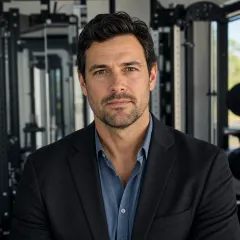
Marcus Feldman
Marcus Feldman is a commercial strength-equipment analyst covering selectorized machines, plate-loaded stations, Smith machines, functional trainers, power racks, benches, barbells, dumbbells, and cable systems. He applies ISO 20957-1 and ISO 20957-2 while comparing rated loads, stability, frame deflection, pulley ratios, cable travel, adjustment increments, guarding, entrapment points, fastener retention, and fatigue cycles. His guides help gym operators, coaches, facility planners, and procurement teams evaluate biomechanics, user capacity, floor layout, maintenance access, durability, and lifecycle value.
Leave a Reply